

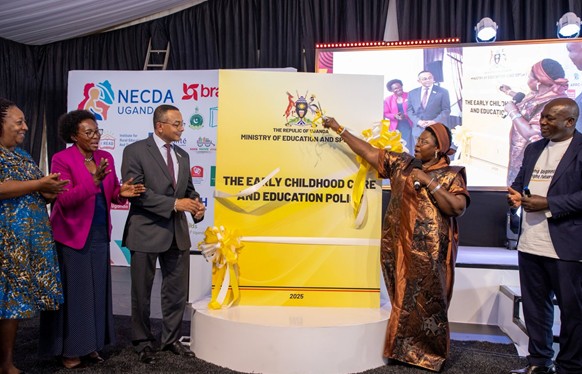
Uganda has marked a significant milestone in its education sector with the official launch of the Early Childhood Care and Education (ECCE) Policy by the Ministry of Education and Sports Uganda.
The move aimed at strengthening foundational learning and ensuring equitable access to quality early childhood education across the country.
Addressing earlier concerns about unnecessary academic pressure placed on young learners, Primary Education State Minister Dr. Joyce Moriku Kaducu, who represented the First Lady and Minister of Education and Sports, Mrs. Janet Museveni, stated that one of the key pillars of the new childhood care policy is to emphasize social education alongside academic instruction.
The launch, held alongside the ECCE Models Marketplace at Nakivubo Blue Primary School, brought together government agencies, civil society organizations, and education stakeholders to showcase innovative, practical models that can drive the successful implementation of the policy.
Organized in partnership with NECDA Uganda, the marketplace served as a platform for learning, collaboration, and scaling proven interventions.
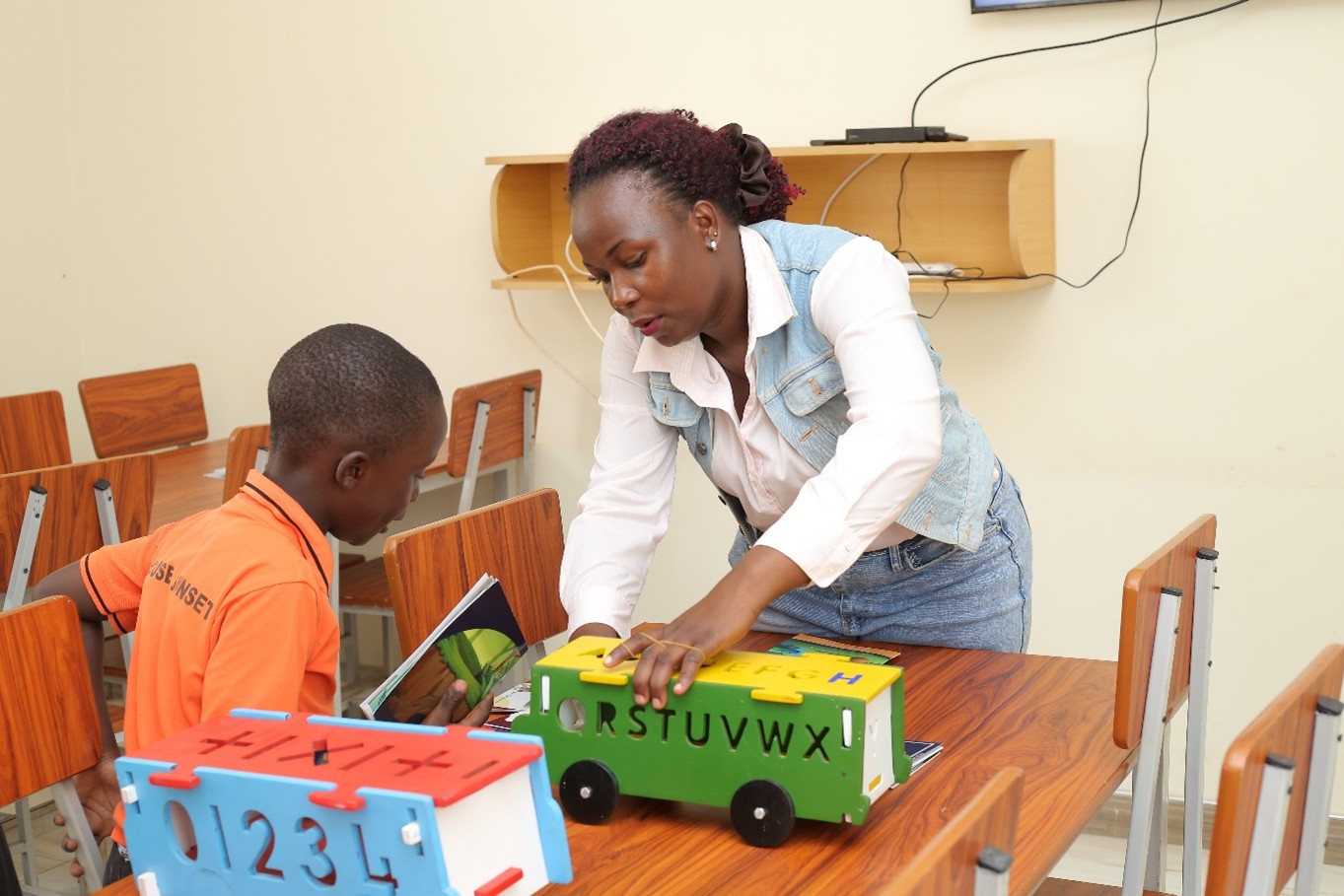
Figure 1 A facilitator from River Flow International engages a young learner using the ECCE Kit, demonstrating hands-on, play-based learning that strengthens early literacy and numeracy
Among the standout contributors was River Flow International, a key stakeholder in advancing early childhood education through its innovative Early Childhood Care and Education (ECCE) Kit, built on its “Learn Through Play Model.”
As Uganda rolls out its ECCE Policy, a major challenge lies in translating national guidelines into practical, classroom-based solutions, especially in underserved and rural communities.
River Flow International’s ECCE Kit directly addresses this gap by equipping teachers, caregivers, and parents with low-cost, locally adaptable learning materials designed to promote literacy and numeracy among children aged 3–8.
The organization’s Learn Through Play Model emphasizes hands-on, activity-based learning, shifting away from traditional rote methods to more engaging, child-centered approaches. According to the organization, this model has already reached between 1,500 and 3,000 children annually, while indirectly benefiting over 1,000 families through improved learning outcomes and parental involvement.
A core pillar of the ECCE Policy is improving the quality of teaching and caregiving at early learning centers. River Flow International is contributing to this goal through targeted training programs. As part of its commitment to policy implementation, the organization plans to train at least 500 early childhood caregivers and teachers across five districts by 2026.
In addition, the organization will support 120 Early Childhood Development (ECD) centres to adopt structured, play-based learning approaches aligned with national standards. This intervention is expected to significantly enhance classroom practices, enabling children to develop foundational skills in a more engaging and effective way.
Evidence from the field already shows promising results. Over six years of implementation, the model has led to increased learner participation, improved recognition of letters and numbers, and greater confidence among children. Teachers have also become more innovative, using locally available materials to facilitate learning.
In line with the ECCE Policy’s emphasis on equity and inclusion, River Flow International’s model specifically targets children and families often left out of formal education systems. These include children in remote rural areas, refugee settlements, urban informal communities, and those with disabilities.
The ECCE Kit incorporates inclusive learning tools such as tactile and visual materials that cater to diverse learning needs. Furthermore, the model integrates parenting support sessions, empowering caregivers, including adolescent mothers, to actively participate in their children’s learning journey.
By bringing education closer to communities and reducing reliance on expensive learning systems, the initiative ensures that no child is left behind.
Another critical component of the ECCE Policy is community involvement in early childhood education. River Flow International’s approach places parents and caregivers at the center of its model not just as beneficiaries, but as co-designers and leaders.
Through community dialogues and ECD centre committees, families contribute to the design and implementation of learning activities, ensuring cultural relevance and long-term sustainability. Some parents even take on leadership roles as peer mentors, supporting others in adopting play-based learning at home.
A powerful example shared at the marketplace highlighted a young mother in eastern Uganda who, after attending caregiver training sessions, transformed her approach to teaching her child. Using simple tools like bottle tops and storytelling games, she helped her once-withdrawn child become confident and actively engaged in class demonstrating the transformative impact of the model.
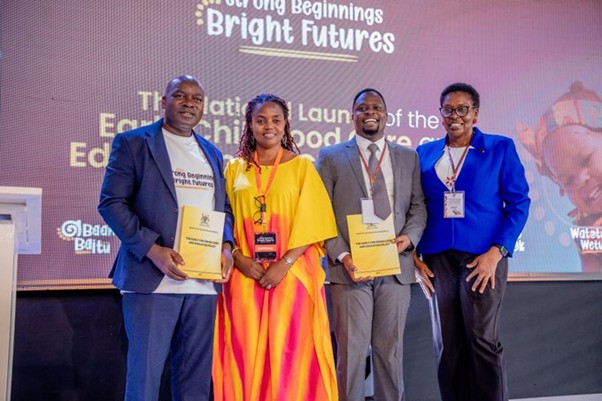
Figure 2: Stakeholders interacting with materials in the Early Childhood Care and Education Kit during an exhibition at Nakivubo Blue Primary School
Beyond direct service delivery, River Flow International is also contributing to evidence generation a crucial element for policy success. The organization plans to document and evaluate community based ECCE models across three districts, producing practical learning briefs for government and partners.
This evidence will help inform decision-making, strengthen implementation strategies, and support the scaling of effective models nationwide.
The ECCE Models Marketplace underscored the importance of multi-stakeholder collaboration in achieving Uganda’s early childhood education goals. With organizations like River Flow International playing a vital role, the country is well-positioned to translate policy into meaningful impact.
As Uganda embarks on this transformative journey, the integration of innovative, community-driven solutions such as the ECCE Kit will be key to building a strong foundation for the nation’s youngest learners ensuring they are not only ready for school, but equipped for lifelong success.
